

Replacing an RV Thermostat with a Household One
Thermostats don’t last forever.
If it feels like the temperature you set on your RV thermostat isn’t accurate, it might be time for a change.
Related Product: Did you know RV Propane Detectors (click to view on Amazon) need to be replaced every 5-10 years? Make sure yours is still up to date before your next camping trip.
The simplest way to replace an RV thermostat is by getting the same brand and model number, but for older RVs, the original part isn’t always available.
It’s also not the best option if you are looking to upgrade the thermostat. Like trading out the old analog for digital.
RV thermostat options are pretty limited. There are only a few basic designs and not all of them are compatible with camper cooling and heating systems.
There’s a wide variety of household thermostats and they are available everywhere, so it makes sense to get one to replace what’s in the RV.
You can replace an RV thermostat with certain household ones, but there are a few requirements. You can’t use just any home thermostat.
In this article, I’ll go over what you need to look for in a household thermostat to replace an RV one.
I’ll also give some recommendations and a comparison of a few of the most popular options among RVers.
See Also: 6 Best Diesel Heaters For Campers, RVs & Vans
What To Look For in an RV Thermostat Replacement
Naturally, there are tons of thermostats to choose from when you start looking at the household options.
Once you choose the one that you think is right for your RV it might take some trial and error with the wiring.
If you aren’t comfortable wiring electronics, you might want to consider getting an RV thermostat over a household one to make things easier.
Many RVers have been able to replace their RV thermostats with other kinds by looking for ones that have these features.
Battery Powered
Since a regular household thermostat powered by the home’s electricity is made for a different voltage, the first thing you need to look for is a thermostat powered independently by batteries.
Most of the thermostats in RVs are analog and are run using 12 volt power from the house batteries.
When you install a new battery powered household thermostat you don’t need to attach the 12 volt power wire.
See Also: Best RV AC Units Reviewed (13,500 & 15,000 BTU)
Low Voltage
Most of the appliances in RVs are run using 12 volt power. That includes the furnace.
You won’t need a large thermostat that’s capable of running the heating and cooling systems for an entire home.
Look for low voltage thermostats that are compatible with 12 volt systems.
Anything that’s 24 or 12 volts is considered low voltage when it comes to thermostats.
Millivolt Thermostat
A millivolt thermostat is a low voltage thermostat that is also made for running furnaces that use gas instead of electricity.
That’s exactly what an RV furnace uses so getting a millivolt thermostat is a good option.
AC/Furnace Combo or Furnace Only
Some RVs only have a furnace and no air conditioner. And others have a separate thermostat for the furnace and air conditioner.
These kinds of campers will need a simple two wire thermostat replacement that is for furnaces.
Most of the RVs on the road today have both the furnace and an AC controlled by one thermostat.
In that case, you will need to get a thermostat that can run both.
See Also: Best Small Portable Propane Heater For Indoor & RV Use
On/Off & Fan Settings
If your RV has an air conditioner connected to the thermostat you will need to get a replacement that at least has an on/off switch or a heat/off/cool selector.
This is usually a toggle switch that can turn from heat to off to cool.
The fan speeds are also something to think about. Not a lot of household thermostats can change the fan speeds like RV ones do.
Many RVers don’t worry about the fan speed settings since there really doesn’t seem to be a difference in temperature regulation. So they just leave the speed selector wire unused.
You can always add a separate switch that’s connected to the fan speed wire so you can still control it.
It’s up to you if you want to be able to control the fan speeds or just leave them on auto all of the time.
Wires
Some RV thermostats use a very simple 2 wire system while others have a lot more for different controls.
Make sure you look at thermostats that are compatible with the number of wires your current RV thermostat has.
With battery powered thermostats the 12 volt power wire that is connected to the RV thermostat will be left off. So you can count out that wire when looking at configurations.
Many of the 6 wire port thermostats can be used with only two wired. But a two wire port thermostat won’t work with more than two wires.
Single Stage
RV heating and cooling systems are single stage since they rarely use multiple heating and cooling sources.
Getting a thermostat that is compatible with single stage systems is best for RV use.
See Also: How To Replace A Non-Powered RV Roof Vent With A Powered Fan

RV Thermostats Compared
Here is a table comparison of some of the most popular RV thermostats if you are looking for an easy replacement or upgrade.
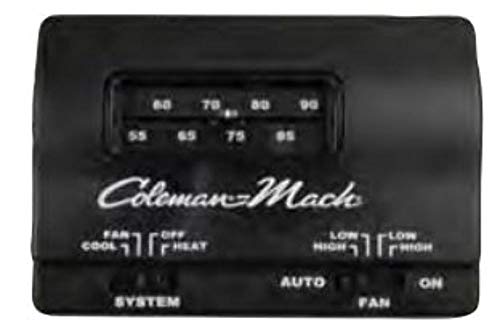
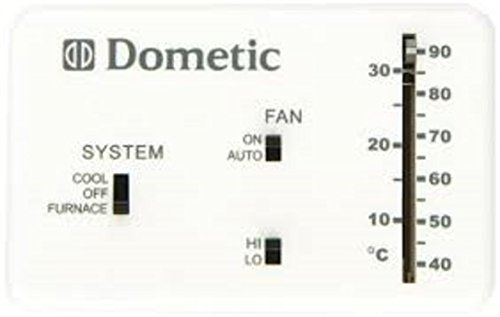


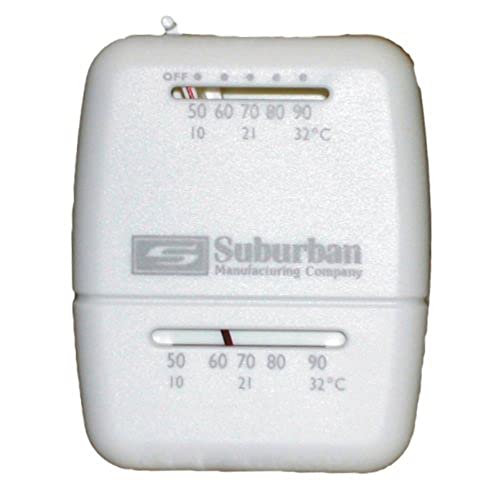
Last update on 2024-04-24 / Affiliate links / Images from Amazon Product Advertising API
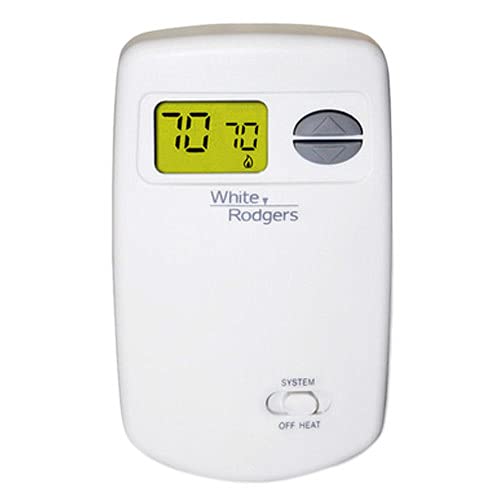
Household Thermostats For RV Use
Here is a table with some popular household thermostats that are often used in RVs.
Wiring these thermostats might take a little more time, but these should work for most RV heating and cooling systems.
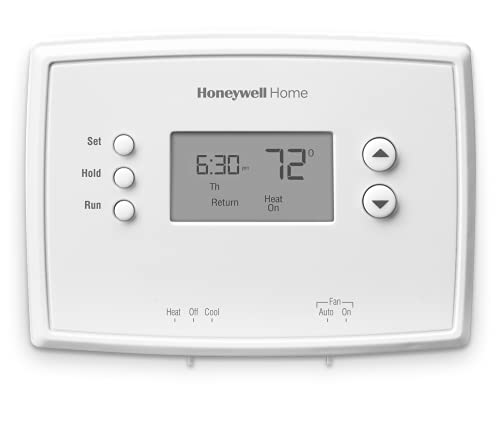


Last update on 2024-04-24 / Affiliate links / Images from Amazon Product Advertising API
Upgrading an RV Thermostat
There are lots of options out there if you want to upgrade your RV thermostat.
If you are looking for something digital the RV specific options are limited but there are lots of great household versions that work great in campers.
See Also: How To Install Solar Panel On RV Roof & Connect To Battery
Make sure you note the wire placements on the old thermostat when you remove it.
This will make installing the new thermostat a lot easier since the wires will most likely have a slightly different configuration.
Remember if you are installing a battery powered thermostat you can leave the 12 volt power wire off.
Have any questions about choosing a household thermostat for an RV? Leave a comment below.

