

If a full-size motorhome feels like too much rig for your first try, Winnebago has built one with you in mind. On June 30, 2026, the company announced the Elora (also sold as the Resa), a 20-foot compact Class C on a Ram ProMaster van chassis, made for people who want more room than a camper van without the size or the learning curve of a traditional motorhome.
The launch is a few months old. Winnebago said the first units would reach dealers in the weeks after that, and its model page now lists the Elora/Resa as a 2027, so if you’re shopping for a first RV this fall, you may well run into one.

A Class C is a motorhome with a van or truck cab up front and a wider living box built behind it. A Class B is a camper van. Winnebago calls this one a compact Class C, and New Atlas calls it a “B+”, the nickname for a small Class C that sits between the two.
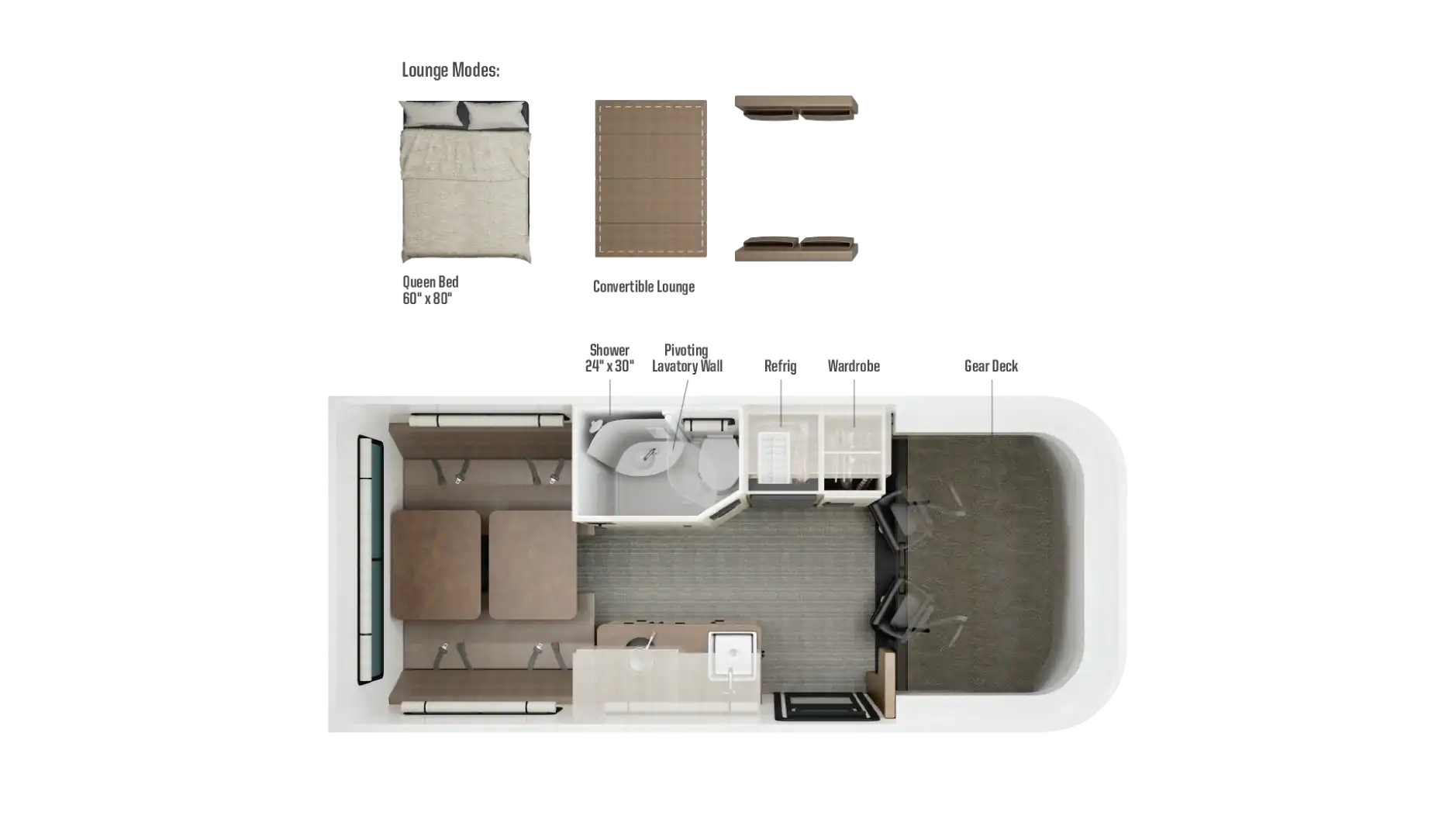
The Elora and the Resa are the same RV under two names. Winnebago has done this before (its View and Navion are one motorhome too) and says the two nameplates let it serve its combined dealer network. For now there’s one floorplan, the 19DC:
The Elora/Resa 19DC at a glance
- Size: 20 feet 4 inches long, with seats for six and beds for four.
- Drive: a Ram ProMaster chassis with a 159-inch wheelbase and a 3.6-liter V6 with a nine-speed automatic.
- Beds: a 60 x 80-inch queen and a powered 54 x 75-inch bunk that lowers from above.
- Bathroom: a wet/dry bath with a cassette toilet (its waste tank is a removable box you carry to a dump point instead of hooking up a sewer hose).
- Power: a 5 kWh EcoFlow lithium battery system with 200 watts of solar charging, and a 2,800-watt gas generator as an option.
- Heat: a Truma Combi heater (furnace and water heater in one) that runs on the chassis fuel.
- Gear: the rear sofas fold up against the wall to clear a garage floor for sports gear, and Winnebago lists up to 2,220 pounds of cargo capacity.
Winnebago’s pitch is simplicity. “With Elora/Resa, we focused on simplifying that experience, bringing together the core systems people need into something that feels familiar from day one, so they can spend less energy figuring it out and more time using it,” said Chris Bienert, the company’s motorhome product manager.

Winnebago says it is for “family weekenders, cost-conscious buyers, or sports enthusiasts who want more space than a B-van and a simple way to travel.” Winnebago RVs, the company’s own YouTube channel, posted a full product tour of the 19DC:

Why I am a fan
If you plan to camp without hookups (no power post, no water spigot), the lithium battery and the solar are the two things you’d otherwise be pricing as upgrades. Here they come built in, around one EcoFlow system.
The heater burns the same fuel you buy at the pump, and at just over 20 feet it fits campsites a bigger Class C won’t. The trade-offs are real. Sleeping four in 20 feet is snug, and the bunk is narrower and five inches shorter than the queen below it, so it’s the bed you give the kids.
The cassette toilet is the other thing to know: emptying the bathroom means carrying a box to the dump point by hand instead of draining a tank through a hose. For a couple, or a couple with one kid, that’s a trade for a rig you can drive like a big van.
Our Class C is larger than this by a couple of feet, and we love how easy it is to park a Class C compared to the 30-foot travel trailer we used to have. For full-timing, I wouldn’t go with a cassette toilet though.
Is a compact Class C right for you?
Before you shop, decide which kind of RV fits the way you camp. Our guide to every type of RV walks through the options, camper vans and fifth wheels included.
At the dealer, sit in it with everyone who’ll travel in it, lie down on both beds and take a test drive.
Are you considering this as your first camper, or downgrading from something larger? Let us know in the comments.


